|
Top Story Adjusting Antarctic Krill Fishery Management for the 21st Century + In the Field with... Silke Laakmann: Biodiversity Connects - Interdisciplinary Collaboration in a Unique South African Ecosystem + Personalia + Event Türen auf mit der Maus + HIFMB inside Postdoc Perspectives + Editorial View from Northwest #24 + Selected Publications + Fun Fact
|
|
|
|
|
Adjusting Antarctic Krill Fishery Management for the 21st Century
|
|
|
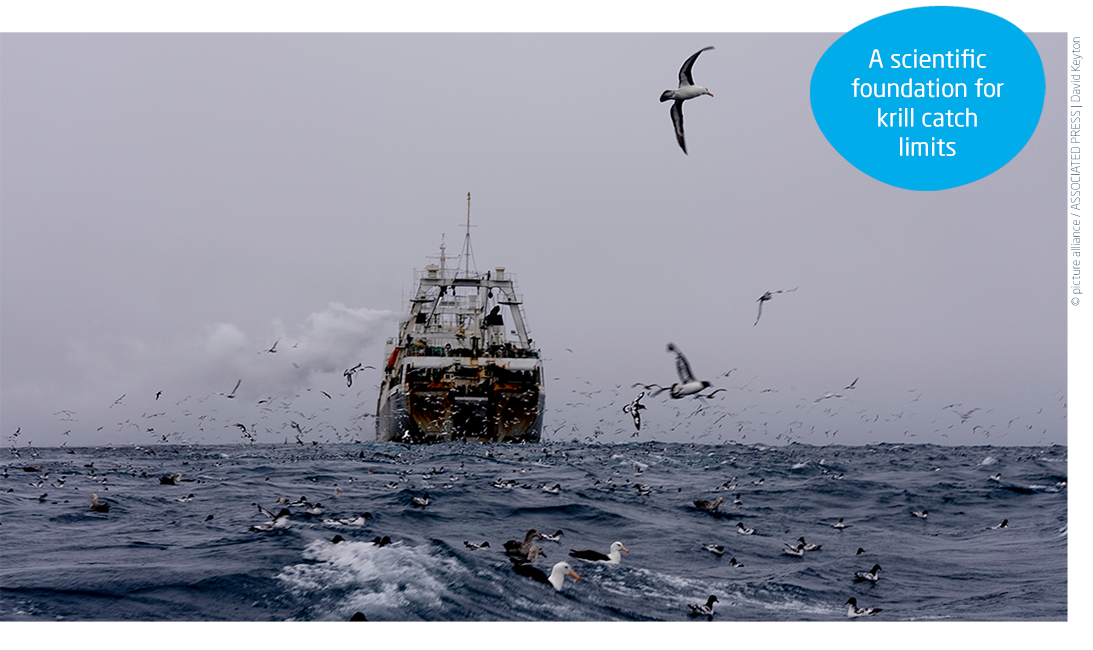
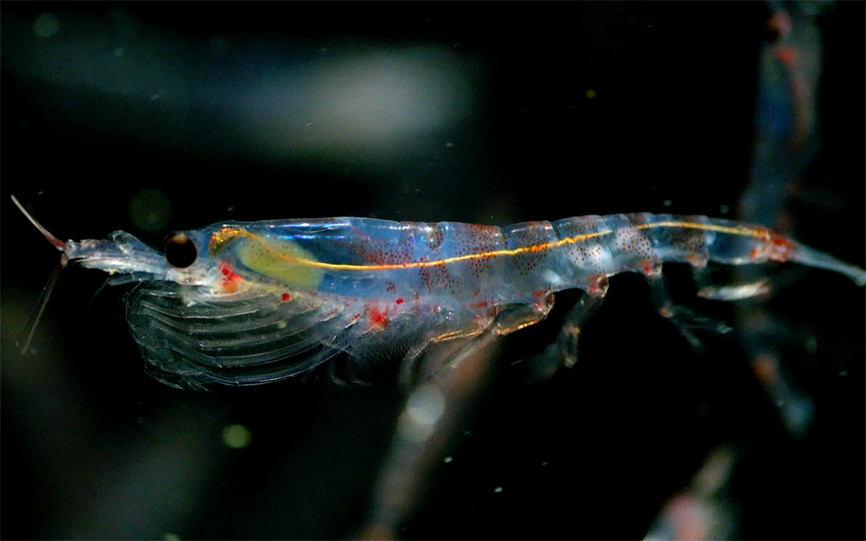
The Antarctic krill (Euphausia superba) fishery, the largest by tonnage in the Southern Ocean, has entered an unprecedented period of growth. Managed by the Commission for the Conservation of Antarctic Marine Living Resources (CCAMLR), the fishery surpassed its historic peak in 2024, with landings reaching 0.62 million tonnes (Mt). All of this catch was taken from the Southwest Atlantic sector (CCAMLR Area 48), raising concerns about the sustainability of current management practices in a rapidly changing environment.
The operational catch limit of 0.62 Mt is under intense debate. On the one hand, it is not related to krill stock size but was derived from the sum of historical catches recorded before 1991. On the other hand, it prevents the fishery to outgrow its historic size in the absence of better understanding of its impacts on krill and the wider ecosystem. Originally introduced as a temporary measure pending the spatial allocation of the much larger “Precautionary Catch Limit” of 5.61 Mt, this operational limit has persisted for over two decades. In 2009, the catch limit was subdivided among four subareas to prevent local overfishing; however, after years of inconclusive negotiations, these spatial restrictions expired in 2024. As a result, the 2025 fishing season began without geographic constraints.
|
|
Antarctic krill (Euphausia superba), Photo: BBC
|
|
|
|
Although the total catch limit represents only about 1% of the estimated krill biomass, this apparent sustainability masks deeper ecological risks. Krill populations fluctuate strongly from year to year, influenced by ocean temperature, sea-ice conditions, and food availability. Climate change further intensifies these variations. As krill is also the key prey item of more than 200 species of predators, concentrated fishing in predator foraging hotspots, or on localised krill spawning aggregations, may therefore undermine both krill resilience and broader ecosystem stability.
To address these challenges, we propose incorporating a new conceptual model, the Krill Stock Hypothesis (KSH), into CCAMLR’s krill fishery management framework. The KSH aims to transform the understanding and management of krill populations by integrating spatial and ecological complexity into decision-making. It emphasises the need to understand and manage krill not as a uniform biomass but as a dynamic, interconnected system of regional populations linked by migration, life-stage distributions, and environmental fluxes.
The KSH provides a scientific foundation for allocating catch limits at finer spatial scales, informed by regular ecosystem monitoring. Key objectives include aligning catch quotas with ecosystem sensibility, reducing uncertainty in biomass estimates, and enabling adaptive management through continuous KSH updates as new knowledge is acquired.
|
|
|
» Integrating the Krill Stock Hypothesis into CCAMLR’s management framework offers a promising step toward safeguarding the Southern Ocean’s ecological balance. «
|
|
|
Bettina Meyer
Marine Biologist
|
|
|
Realising this vision requires sustained investment in data collection and monitoring. Long-term acoustic surveys, predator tracking, and advanced remote-sensing technologies can reveal how krill stocks respond to environmental variability. Equally vital is the participation of the fishing industry as a research partner, providing logistical support, funding, and access to observational data. Cross-sector collaboration will be essential for filling critical knowledge gaps in krill stock dynamics and predator interactions.
We presented our proposal to integrate the Krill Stock Hypothesis into the CCAMLR management framework to decision-makers at the CCAMLR annual meeting from October 19 to 31, 2025, in Hobart, Australia, where it was endorsed by the Scientific Committee of the Commission of the Conservation of Antarctic Marine Living Resources (SC-CAMLR) for inclusion in future krill fisheries management.
This endorsement comes at a critical time: The expiry of the conservation measure that distributed krill catches in space in October 2024 resulted in record catches during the 2025 fishing season and the fishery closing early when the catch limit was reached. Most of the catch was taken from small areas in the ecologically sensitive Antarctic Peninsula region, which highlights the urgent need for CCAMLR members to agree on and implement an adaptive, ecosystem-based fisheries management.
|
|
_____________________________________________________
Meyer B et al. (2025). Adjusting the management of the Antarctic krill fishery to meet the challenges of the 21st century. PNAS. https://doi.org/10.1073/pnas.2412624122
|
|
Silke Laakmann: Biodiversity Connects – Interdisciplinary Collaboration in a Unique South African Ecosystem
|
|
|
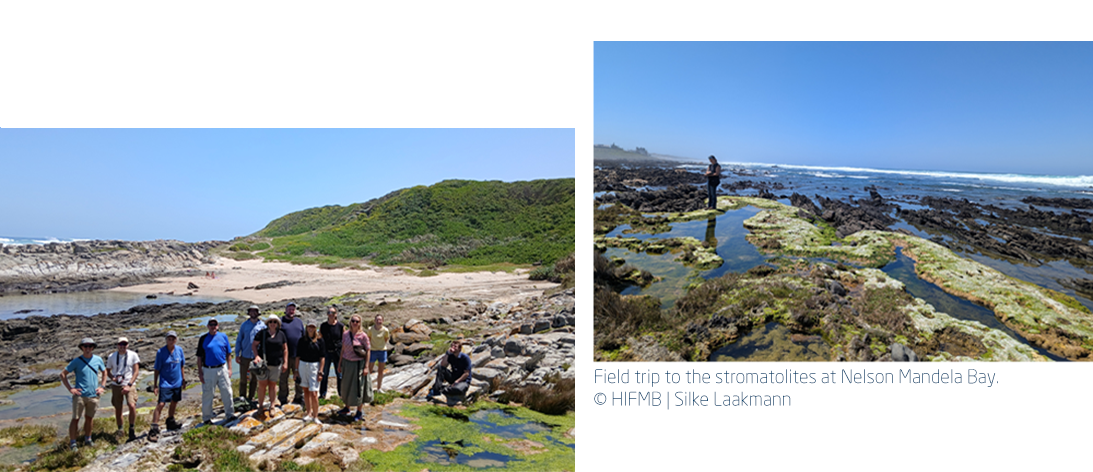
The lush vegetation of South Africa’s coast, dotted with bright yellow and pink flowers, meets sandstone and quartzite that reach directly into the sea and on which the waves break. Many rocks are covered in orange lichen. Green shimmering pools harbour brownish, bubbling structures: stromatolites.
After sampling these pools 2,5 years ago in Nelson Mandela Bay and Cape St Francis, we are returning to these sites in October 2025. This time, instead of hauling cool boxes and sampling gear, we spend a week discussing results from our joint DFG project and exploring new research questions. Our team includes biologists, environmental geologists and hydrogeologists from the Nelson Mandela University (NMU) in Gqeberha, the partner university of the University of Oldenburg (UOL), as well as from the University of Johannesburg, the Council for Geoscience in Cape Town, the UOL and the HIFMB.
We are investigating the hydro(geo)logical and geobiological influences and the extent of anthropogenic impacts on these unique habitats. Stromatolites are layered deposits formed by the precipitation of carbonate minerals and the cementation of trapped sediments by microbial assemblages. They formed in shallow waters of the early Earth, but have decreased in frequency and diversity since the Mesoproterozoic (1.25 Ga). Their decline is probably related to the development of competing and destructive organisms or a changing and unsuitable biogeochemical environment.
First discovered along this coast in 2000, stromatolites have since been the focus of growing interdisciplinary work, highlighted during the 2nd colloquium on stromatolite research at NMU at the beginning of our stay. Starting with the emergence of life in deep time, in which the stromatolites played a decisive role, through to today's biodiversity of micro- and macrofauna, various interdisciplinary insights and overviews are included. So, we are not only discussing project findings but also the role of stromatolites over the last 600 million years.
|
|
|
Gudrun Massmann from the UOL, Gavin Rishworth and Carla Dodd from Nelson Mandela University, Hayley Cawthra from Council for Geoscience and Alan Smith, who discovered the South African stromatolites in 2000, discuss their findings on the role of fresh groundwater for the stromatolites in Nelson Mandela Bay. The groundwater feeding the pools is very young, rich in calcium and bicarbonate and below settlements sometimes contaminated with nutrients and micropollutants. It emerges as springs, where fossil dunes overly impermeable bedrock. Meanwhile, I discuss with Peter Teske and Matthew Adair from the University of Johannesburg (and Gavin Rishworth, who splits his time between the groups) the results of the molecular genetic identification of the communities of bacteria, algae and fauna that we have analyzed in the stromatolite sites, estuaries and rocky shores to understand the connectivity of the sites in addition to its biodiversity. There is still much to explore in these systems: Most of the identified molecular genetic units cannot be assigned to a known species due to gaps in reference databases or because the species are not described yet. After my work in the North Sea and Baltic Sea, where the fauna is quite well described and our molecular genetic analyses allow us to analyze biodiversity at species level in the vast majority of cases, working in these habitats is a new approach for me and I am glad that we are developing a common approach to learn more about the unknowns in this system.
This one week in Gqeberha and Cape St Francis has once again shown how valuable our open and trusting collaboration and scientific exchange is and how much potential remains for future joint research.
|
|
PERSONALIA
 New Co-director New Co-director
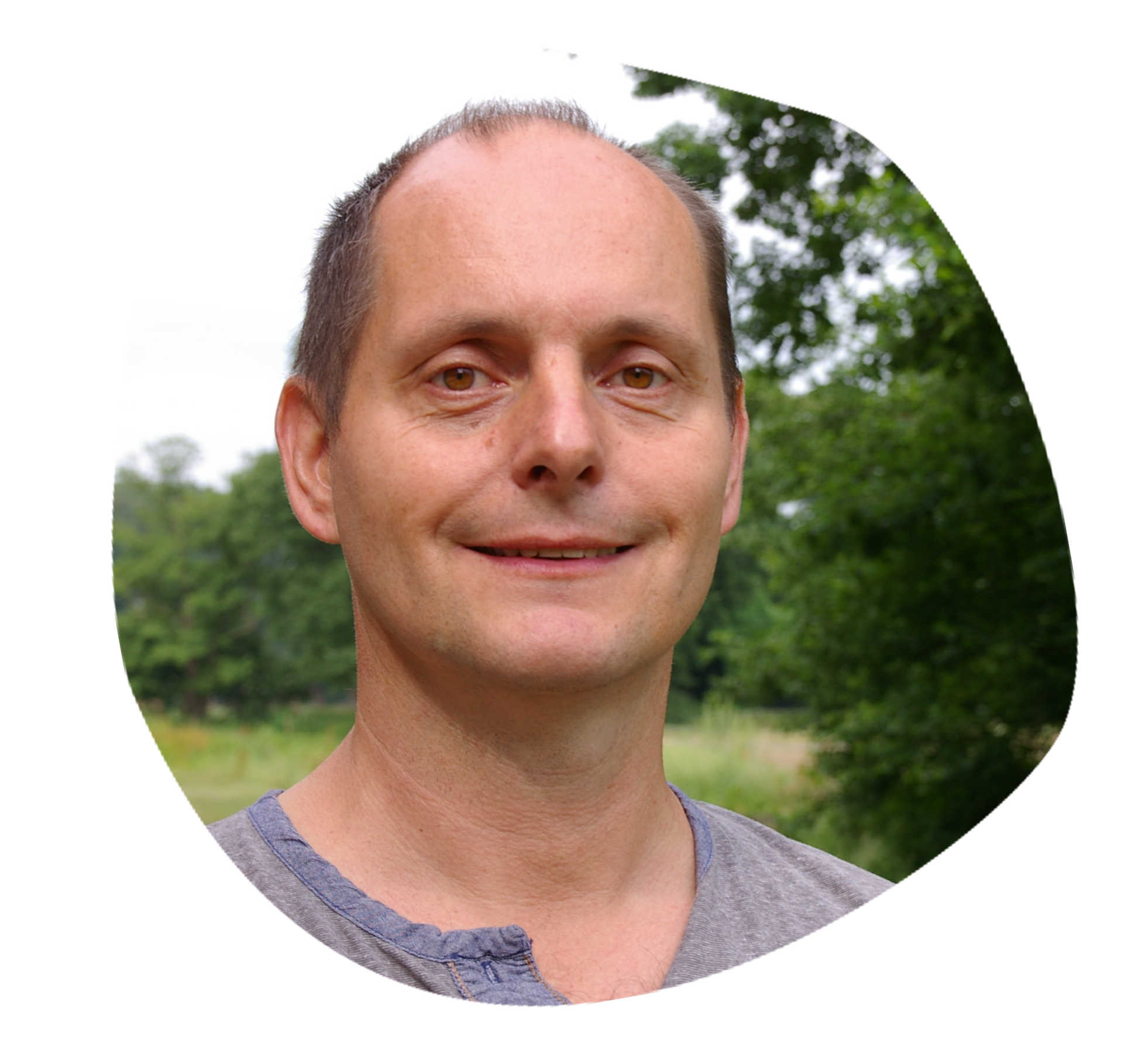
Bernd Blasius was appointed Co-Director of HIFMB by the Cooperation Board on 4 November 2025, succeeding Gabriele Gerlach, and joins the Directorate alongside Helmut Hillebrand, Bettina Meyer and Iliana Baums. As a founding PI of HIFMB, he leads the Mathematical Modelling research group at the ICBM/University of Oldenburg and, as Co-Director, represents HIFMB in scientific matters and reports on its development and achievements to the Cooperation Board.
|
|
»Türen auf mit der Maus« - A day of Discovery at HIFMB
|
|
|
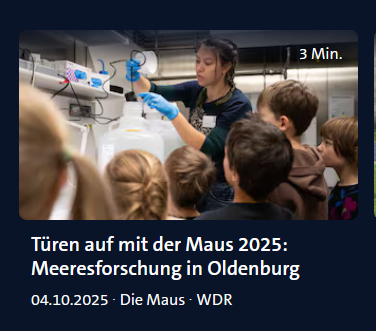
On October 3rd, we welcomed 70 children and their families as part of the "Türen auf mit der Maus" ("Open Doors with the Maus") event. At six hands-on stations, the children explored the diversity of marine research at HIFMB, from listening to whale calls and discovering plankton superheroes to experimenting in the lab and solving our biodiversity quiz.
|
|
|
A special highlight: the Mouse herself visited HIFMB together with presenter Christoph Biemann. You can watch their tour and impressions from the day in the ARD feature. Click here to watch. |
|
|
|
|
Hi, I’m Amelie Luhede, a postdoc in the Plankton Ecology and Biodiversity Theory groups, researching critical biodiversity transitions. Thanks to the EXC² program supported by the Lower Saxony Ministry for Science and Culture, I have the opportunity of spending three inspiring months at Nelson Mandela University in Gqeberha, South Africa, working with the Institute for Coastal and Marine Research (CMR).
|
|
|
|
|
Halfway through my stay, I can already say this experience has been nothing short of amazing. South Africa’s biodiversity is breathtaking – from spotting dolphins during my morning runs by the ocean to exploring national parks and even the nearby campus nature reserve, every encounter reveals incredible richness in plants and animals.
Equally impressive are the people I’ve met. Interacting with scientists across disciplines and career stages has been both stimulating and rewarding, and the warmth and openness of everyone at Nelson Mandela University have made me feel truly welcome. I have the fantastic opportunity to take part in field work on land and sea, learning where and how the data that I am using in my analyses is collected. Another highlight so far: I had the chance to participate in a workshop and engaging discussions on ecosystem health indices and tipping points, showing how our research can contribute to and influence policy making.
A heartfelt thank-you to all staff and students at Gqeberha for creating such a wonderful environment for exchange and inspiration. Many new ideas have emerged – and I’m certain this is just the beginning of more exciting collaborations to come!
|
|
|
Not sure about how you feel, but I have the increasing urge to read some history books in order to understand – or at least frame – the ongoing changes in science and society. Two very different of my recent reads were the fact-loaded and detail-rich scientific analysis of the German science and university system under the fascist regime by the historian Michael Grüttner[1] and the posthumously published autobiographical notes of the political journalist Sebastian Haffner[2]. Grüttner analyzes how the academic system was altered after 1933, from the prosecution and removal of unwanted staff members to the installment of ideologically fitting research fields under a politically streamlined leadership that supported the preconditioned science that fascism needs[3]. Haffner’s book is a brilliant personal report of the time between World War I and 1933, written presumably 1939 but then not published as the war started. I had goosebumps reading this 300 page fragment, and I have goosebumps while writing about it. In a witty, clear-sighted and non-apologetic style, Haffner manages to make you understand how a democracy erodes and how individuals accept that their personal freedom is clipped. Retrospectively, it is almost unbelievable how well Haffner already understood what was happening while it was happening. The similarities with the current rise and empowerment of barely tamed fascistic movements in many countries across the world are breathtaking.
Despite their very different approaches and intentions, a common theme in both books is the inability of academia to cope with the brute force of being ignored or overruled. Notwithstanding some exceptions, Grüttner clearly shows that most of the science community were bystanders when Jewish or “left” colleagues were “removed” from academia – and it makes me feel guilt given our lame protests towards massive changes in the US or elsewhere. Haffner, growing up in a conservative, intellectual environment, describes first hand how his law faculty and fellow students were ideologized with little active resistance. Why is this?
Scientists and intellectuals are trained to argue and differentiate, to criticize and accommodate criticism, but they seem quite helpless if their counterpart does not even enter their playground. Blunt ignorance does not reply to arguments and the differentiated “yes, but” of scientific discourse does not survive an aggressive “no”. The feedback loops that maintain a diversity of stances, methods, opinions, disciplines, and frameworks in academia only function when science can develop unconditionally. I had not imagined that we ever would have to argue for the freedom of science again, but it seems we need to – and perhaps it is wise to start stepping up our defiance. Let’s defiantly emphasize transparency, openness and diversity despite counterfactual and depreciating narratives, and let’s defiantly remain international and interactive in the face of nationalistic and segregated politics.
|
|
_____________________________________________________
[1] Grüttner M (2025). Talar und Hakenkreuz – Die Universitäten Im Dritten Reich. Bundeszentrale für Politische Bildung, Bonn. ISBN 978-3-7425-1156-0. (I am not aware of an English Version).
[2] Haffner S (2000). Ansichten eines Deutschen – Die Erinnerungen 1914-1933. Pantheon, München. ISBN 9783570552131. (in English in 2002 as: Defying Hitler, A Memoir, 1st illustrated edition, Orion Publishing Group, ISBN 9780297607625)
[3] Grüttner brings a chapter showing that the fascists were not anti-science, they were just against unconditional science and intellectual discourse. By contrast, science preconditioned on ideological, utilitarian, and military grounds was highly welcomed.
|
|
RESEARCH
Selected Recent Publications
Peters K, Vadrot ABM. (2025). Social science perspectives on marine biodiversity governance. Frontiers in Marine Science.
doi.org/10.3389/fmars.2025.1724090
Grottoli AG, Hulver AM, Thurber RV, Toonen RJ, Schmeltzer ER, Kuffner IB, Barott KL, Baums IB, et al. (2025). Future of coral bleaching research. BioScience. doi.org/10.1093/biosci/biaf066
Luhede A, Verma P, Upmann T. (2025). Value of Information analysis for marine conservation decision making. Environmental Science & Policy. doi.org/10.1016/j.envsci.2025.104164
Laakmann S, Cornils A, Metfies K, Koplin J, Neuhaus S, Bunse C, Niehoff B, Flores H. (2025). Of sequences and images – diversity and quantity of Arctic epipelagic zooplankton by an integrative approach. Journal of Plankton Research. doi.org/10.1093/plankt/fbaf059
Hillebrand H, Dajka JC, Halbach M, Happe A, Röchert R, Seppelt R, Settele R, Weitere M, Winter M, Zinngrebe Y, Hodapp D. (2025). Operational perspectives for biodiversity indicators. Ecological Solutions and Evidence. doi.org/10.1002/688-8319.70134
Eren AM. (2025). Gifting future scientists the past through well-preserved specimens of modern microbial ecosystems. Nature Communications. doi.org/10.1038/s41467-025-62138-6
+ more on Google Scholar: https://scholar.google.com/citations?user=uCoLTyAAAAAJ&hl=en
|
|
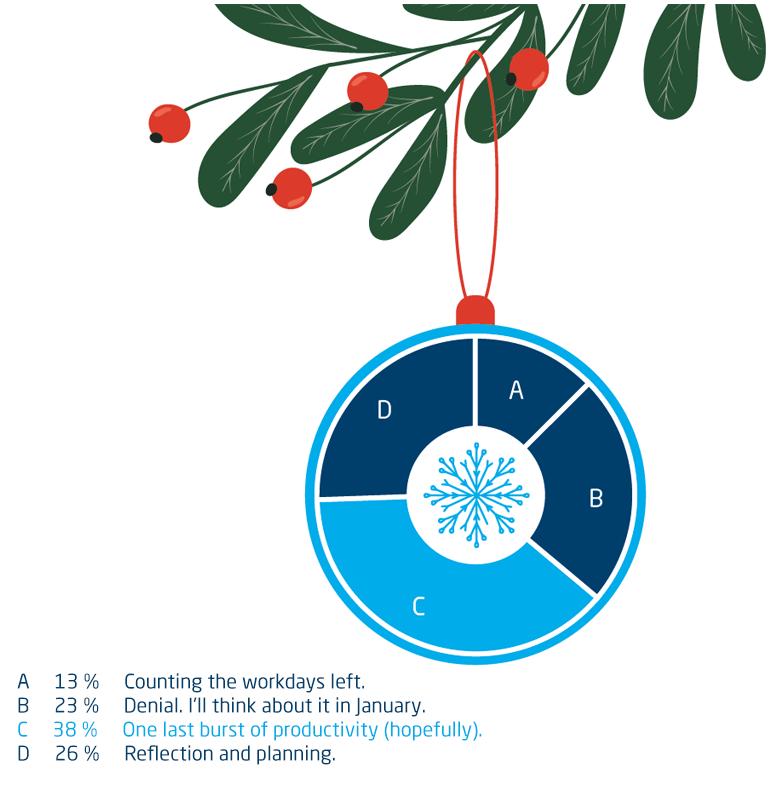
End of the year. What's your mindset?
|
|
|
*answered by HIFMB employees
|
|
|
|
|
|
|