|
Top Story How to Localize Origins of Vulnerability in Complex Networks + In the Field with... Osama S. Saad: Developing a Monitoring System for Coral Reefs in the Red Sea + BBNJ Updates Time for Ocean Protection? The BBNJ is Welcomed Into Force + Personalia Prof. Rossella Alba + Editorial View from Northwest #25 + Selected Publications + Fun Fact
|
|
|
|
|
How to Localize Origins of Vulnerability in Complex Networks
|
|
|
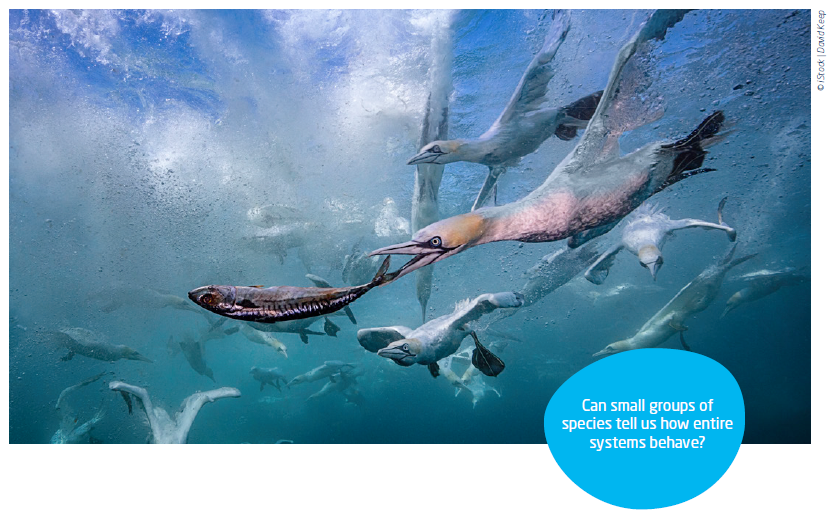
The challenge in predicting how systems react to disturbances lies deep in their complexity. The individual parts are interconnected, each having its own function while simultaneously influencing everything else - either directly or indirectly. It is thus easy to imagine and model systems like this as networks.
The way complex systems develop is not entirely random but often stems from self-organization. These systems evolve within dynamic environments, necessitating continuous adaptation to maintain functional integrity. But how do they deal with sudden changes? Can these systems survive them or do they have to undergo drastic changes?
The question remains if systemic failure is a result of the response as an interconnected whole or if it is possible to understand which specific components might be the drivers behind it. While we use food webs to further investigate these problems, the same holds true for all kinds of systems that can be described using networks.
We address this challenge by introducing the concept of functional motifs: small subgraphs whose mere presence dictates systemic properties that cannot be suppressed by the influence of the wider environment.
Historically, the search for such motifs has focused on long-term dynamics. In ecology, we know from the competitive exclusion principle that two species competing for the same limiting resource cannot coexist in a stable system. Either one species has to adapt to a different niche or the weaker competitor goes extinct. Mathematically speaking, this is quite interesting as we can also see that this form of exploitative competition is represented in the foundation we use to determine a system's stability: its eigenvalues and eigenvectors. A specific eigenvector localizes within the corresponding exploitative competition motif, thereby constraining its associated eigenvalue to the dynamics of this local subgraph. However, identifying other motifs with such strong impacts has proven difficult as it relies on certain symmetries that can rarely be found in weighted networks that characterize most real-world systems.
|
|
|
» A new simplification in modeling enables us to predict system failures before they begin. «
|
|
|
Melanie Habermann
Mathematical Modeller
|
|
|
To bridge this gap, we can shift our focus toward transient dynamics or, more specifically, reactivity, a property quantifying the instantaneous amplification of a perturbation. In reactive systems, this initial response can be violent, pushing the system further away from its equilibrium. While a system may be stable in the long run, high reactivity can trigger strong swings that can lead to catastrophic collapses should the system traverse a bifurcation point and transition toward an unstable equilibrium. Unlike stability, this behaviour is inherently rooted in small parts of a network. That means that for reactivity, every subgraph acts as a functional motif. These motifs provide us with an inviolable lower bound for the whole system’s reactivity. Given that reactivity is determined by the eigenvalues of the symmetric part of the Jacobian matrix, Cauchy’s interlacing theorem ensures that the eigenvalue spectrum of any subgraph is bounded by the spectrum of the global matrix.
To get a better understanding of the practical implications of this finding, we conducted a numerical analysis of generalized food web models with 15 species, comparing the impact of different food web structures and different parametrizations. Numerical simulations demonstrate that motifs comprising only two or three nodes can account for over 99% of the total system reactivity. Furthermore, in the vast majority of cases, a single predator-prey interaction alone contributed more than half of the system’s entire reactive response. This finding is noteworthy, as it suggests that reactivity in large-scale networks is not a diffuse emergent property where every single node contributes to the behaviour, but is instead driven by highly localized hotspots.
This framework offers us a new path forward when it comes to the understanding and management of complex systems. If we can identify those critical subgraphs that are the drivers behind a system’s reactivity, we gain a new way of thinking about these networks, thereby obviating the requirement for exhaustive parameterization of all individual elements. Instead, the specific topological structures that act as the most prominent amplifiers of perturbations move to the fore.
While we used ecological food webs as example systems for our analysis, it is evident that this approach has direct applications beyond this field, providing a foundation to track down the origins of cascading failures in other kinds of large networks. It could be a promising strategy to search for vulnerabilities in supply chains or power grids, or to detect social clusters with high risks of spreading in epidemics. The simplification in modeling we gain by the use of motifs and the focus on transient instead of long-term dynamics enables us to predict and hopefully prevent system failures before they begin.
|
|
_____________________________________________________
Habermann M, Fahimipour AK, Yeakel JD & Gross T. (2026). Functional motifs in food webs and networks, Proceedings of the National Academy of Sciences. Vol. 123, No. 5. doi.org/10.1073/pnas.2521927123
|
|
Osama S. Saad: Developing a Monitoring System for Coral Reefs in the Red Sea
|
|
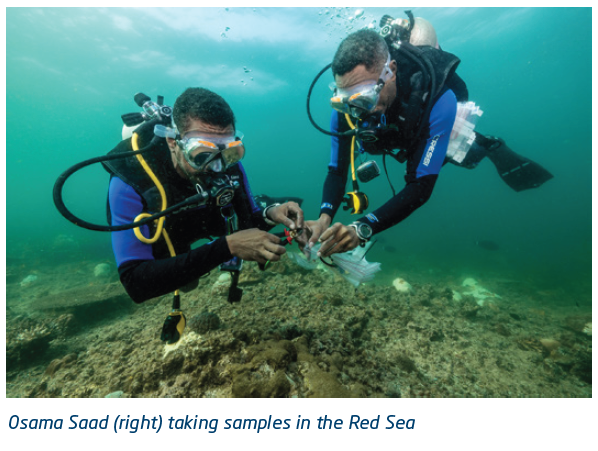
I am Osama S. Saad, an Assistant Professor at the Department of Biological Oceanography, Red Sea University Sudan. Through a 8-months junior fellowship at Hanse-Wissenschaftskolleg (HWK), I am currently a guest researcher at HIFMB working with Prof. Iliana Baums and Dr. Silke Laakmann.
Our aim is to develop an environmental DNA (eDNA) protocol for monitoring the diversity and community structure of the coral reef of Sudan. In fact, the Red Sea corals are exceptional, and extremely resistant to rising water temperatures compared with corals anywhere else in the world. The validation of the eDNA protocol involves a multi-level approach, including in silico analyses, controlled aquarium and laboratory experiments, and field sampling from coral reef sites in Sudan to ensure reliability and applicability under real environmental conditions
|
|
|
The project is currently under development, and this period has allowed me to refine the methodological framework, optimize sampling strategies, and strengthen laboratory workflows related to eDNA analysis. I have also gained valuable insight into quality control procedures and best practices for ensuring reliability and reproducibility in molecular-based monitoring. As the project progresses, these skills will enable me to establish a robust and context-appropriate eDNA monitoring system for coral reefs. It is hoped that this attempt will advance our understanding of the coral community and inform decisions for appropriate interventions and management of coral reefs.
|
|
SAVE THE DATE
Marine Social Science Lecture
Date: November 4+5, 2026
Place: Oldenburg (guest lecture also online)
Topic: Infrastructuring
More updates following soon.
|
|
|
Prof. Mia Bennett, political geographer at the University of Washington, will be this year's keynote speaker.
|
|
|
|
|
BBNJ UPDATES BY PROF KIMBERLEY PETERS
|
|
Time for Ocean Protection? The BBNJ is Welcomed Into Force
|
|
The 17th January 2026 was heralded as ‘a historic day’ for the protection of marine biodiversity. Germany, and a host of other countries, formally put into force the new international agreement on Biodiversity in Areas Beyond National Jurisdiction (BBNJ). The treaty is no small feat: it aims to close the gap in previous treaties, notably the United Nations Convention on the Law of the Sea (UNCLOS), to tighten the protection of oceans and resources in the High Seas specifically.
Managing space outside of state jurisdiction is tricky but this historic day represents only one day in a much longer journey towards ocean protection in a zone where no single nation has control. The treaty began with formal negotiations in 2018, but preparatory work was decades longer. Accordingly, the BBNJ is a product of many days of discussion, negotiation and compromise. It will be a product of many days, and years, ahead.
How history will judge this day is yet to be seen (including who the treaty works for and what visions of the future it enables). As HIFMB scientists noted in the press, the BBNJ is important, but not perfect. Indeed, I was struck (as a Brit) that this historic day for the entry into force of a global treaty, was undeniably patchy. The UK was not quite up to speed. ‘Our’ historic day here in Germany, was not theirs in the UK. And the same goes for other countries: those who have ratified and of course, those that haven’t (and won’t).
It is important to keep a watch on how the BBNJ develops in practice. This newsletter section will track key developments as we assess whether (and for whom) the treaty delivers meaningful change for ocean protection.
|
|
In January 2026, Rossella Alba has joined the HIFMB as Junior Professor of Marine Policy and Management. The professorship is a joint appointment with the Alfred-Wegener-Institute Helmholtz Centre for Polar and Marine Research and the University of Oldenburg. She comes to HIFMB from Humboldt-Universität zu Berlin, where she was a postdoctoral researcher, and holds a PhD in human geography from Trier University.
|
|
|
|
Together with her working group, Rossella explores how we protect, use, and re-claim coastal and marine environments, focusing on policy practices, infrastructure, and knowledge production. She is particularly interested in how ocean challenges and the ways they are addressed - whether through new management tools, technologies, or research frameworks - are shaped by geography, history, expertise, and everyday practices. For Rossella, researching management and policy is fundamentally about asking whose knowledge, perspectives, and interests are recognized, prioritized, or overlooked, and what this means for specific communities and places.
She is committed to fostering plural, inclusive, and collaborative approaches to understanding and governing oceans. This goes beyond sharing research findings, involving the development of innovative methods and creative approaches that support joint learning and reflection across the natural and social sciences, as well as practice — including policy, art, and activism.
hifmb.de/marine-policy-and-management
|
|
The Cemetery of Solid Research
|
|
|
|
One of my main scientific interests lies in research synthesis and quantitative meta-analysis, trying to remotely sense the overall messages that can be derived from many independent (and often highly diverging) case studies. One of the major issues in synthesis is the research that we do not see, as we can only synthesize what is published and miss all the rest that we however assume is out there - something like the dark matter of science. Classically, these discussions circle around publication biases towards economically strong regions and against inconclusive or non-significant results. While synthesis projects started to address these issues, I sense a new level of bias emerging against “solid research”, i.e., studies with valid results that still do not see the light of publication. Solid is often used as synonym to boring, and therefore nobody bothers to publish these studies in the face of an ever-increasing list of priorities.
There is no blame here, I understand the reasons and do not stand outside of the issue. Early career researchers need to focus on the most exciting aspects in their portfolio to secure positions and tenure, so they defer the less interesting results for “later”. But when this “later” arrived, the now-senior researcher is still or even more time-compressed, and prioritizes new exciting outcomes over long-simmering legacy results. My personal cemetery of solid research comprises something like 10 papers for which I have solid data, but I do not foresee any future where I have time to write these down. But even if so, it will be difficult to find a journal or a readership as indeed, taken for themselves, solid results might indeed be … just that: solid. So why bother writing a full manuscript? Because in the context of synthesis, the absence of many studies actually distorts our view of the overall picture. It feels a bit like describing Rembrandt’s Night Watch, but only seeing the bright colors because the shadows were never painted. Not only do we miss the full picture, we also ramp up our expectations when evaluating papers or applications as the baseline for comparison becomes so distorted.
The strange thing is that the problem of invisible research occurs although the number of scientific outlets and published papers steadily increases. So, is there an alternative to the cemetery of unpublished solidity? Can we imagine something like a fair where “data seek authors” or a journal for future meta-analysis that publishes mini-papers (just methods and results, no intro or discussion)?
Sincerely, Helmut Hillebrand
Director — Professor of Pelagic Ecology
helmut.hillebrand@hifmb.de
|
|
RESEARCH
Selected Recent Publications
Turnlund AC, O'Brien PA, Rix L, Ferguson S, Boulotte N, Jeong SY, Webster NS, Diaz-Pulido G, Wahab MA, Lurgi M, Vanwonterghem I. (2026). Bacterial Communities Associated with Crustose Coralline Algae Are Host-Specific. Microbiology Open. doi.org/10.1002/mbo3.70213
Trigodet F, Sachdeva R, Banfield JF, Eren AM. (2026). Troubleshooting common errors in assemblies of long-read metagenomes. Nature Biotechnology.
doi.org/10.1038/s41587-025-02971-8
Kunze C, Petchey OL, Ghosh S, Hillebrand H. (2025). Species Interactions Determine the Importance of Response Diversity for Community Stability to Pulse Disturbances. Ecology Letters.
doi.org/10.1111/ele.70299
Freel KC, Tucker SJ, Freel EB, Stingl U, Giovannoni SJ, Eren AM, Rappé MS. (2025). New SAR11 isolate genomes and global marine metagenomes resolve ecologically relevant units within the Pelagibacterales. Nature Communications.
doi.org/10.1038/s41467-025-67043-6
Beng KC, Akimova A, Laakmann S, Sidorenko V, Rubinetti S, Pineda-Metz SEA, Pogoda B, Brand SC, Klemm K, […] Sell AF. (2025). Integrating Molecular Methods and Biophysical Modeling to Assess Functional Connectivity between Marine Protected Areas. Ecological Applications.
doi.org/10.1002/eap.70150
Hillebrand H, Baums IB, Beng KC, Dajka JC, Franke A, Hodapp D, Laakmann S, Levi S, McCarthy A, Neun S, Oestreicher A, Rädecker N, Sebuliba S, Smykala M, Striebel M, Tallon AK, Happe A. (2026). Towards a broader perspective on marine biodiversity change. Marine Biodiversity.
doi.org/10.1007/s12526-025-01587-0
+ more on Google Scholar: https://scholar.google.com/citations?user=uCoLTyAAAAAJ&hl=en
|
|
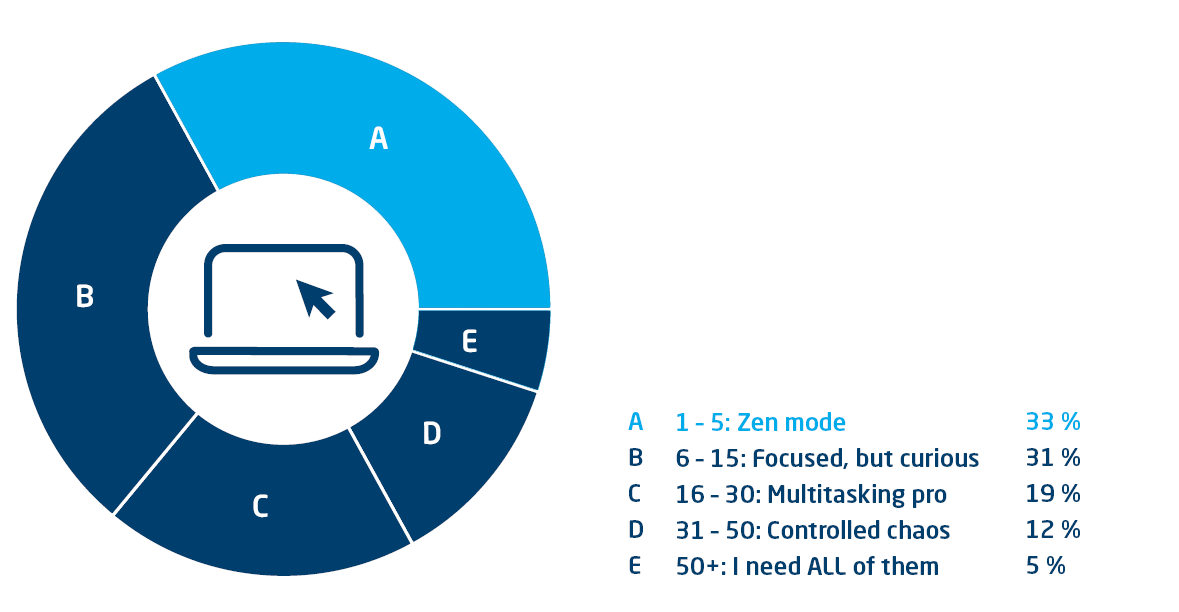
How many browser tabs do you currently have open?
|
|
|
*answered by HIFMB employees
|
|
|
|
|
|
|